How to Choose the Best Ultra Low Freezers for Your Lab?
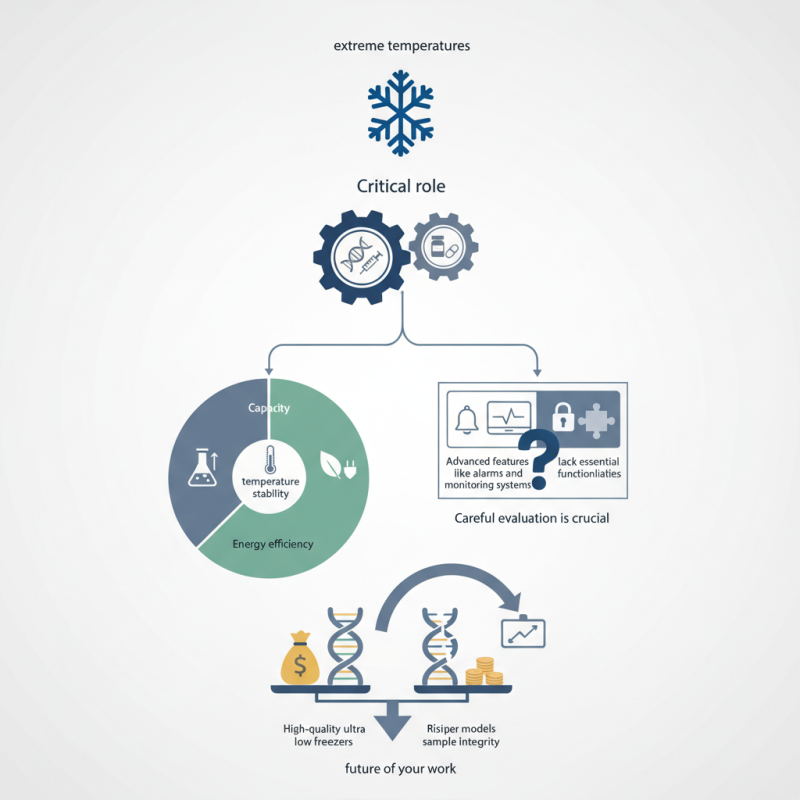
Choosing the right ultra low freezers for your lab is vital. These freezers play a critical role in preserving temperature-sensitive materials. They safeguard biological samples, vaccines, and pharmaceuticals at extreme temperatures, often reaching -80°C or lower.
Consider your lab's specific needs. Think about capacity, temperature stability, and energy efficiency. Some ultra low freezers offer advanced features like alarms and monitoring systems. Others may lack essential functionalities. Thus, careful evaluation is crucial. Inadequate choices can lead to costly mistakes, risking sample integrity.
Reflect on your budget. High-quality ultra low freezers often come with a significant price tag. However, cheaper models might jeopardize research quality. Weigh the pros and cons thoughtfully. Your choice influences not just today but the future of your work.
Understanding the Importance of Ultra Low Freezers in Laboratories
Ultra low freezers are critical in laboratories. They provide safe storage for biological samples, reagents, and sensitive materials. These freezers typically operate at temperatures below -70°C. According to a report by the National Institutes of Health, the stability of samples stored at these temperatures is significantly enhanced. This can protect integrity over long periods.
Laboratories often face challenges in choosing the right ultra low freezer. It’s essential to consider capacity, energy efficiency, and cooling performance. A study by the University of California highlights that energy-efficient models can reduce operational costs by up to 30%. However, some models may not maintain temperature consistently across all sections. This can lead to sample degradation over time.
In addition, noise levels can be a concern in shared lab environments. Some units may produce vibrations or sounds that distract researchers. A balance between performance and user comfort is vital. While price is often a driving factor, investing in a reliable and quiet model can improve lab workflow. Each lab's needs are distinct, and it’s crucial to reflect on these factors before making a decision.
Usage Analysis of Ultra Low Freezers in Laboratories
Key Features to Consider When Selecting Ultra Low Freezers
When selecting an ultra low freezer for your lab, several key features deserve attention. Temperature consistency is critical. Look for units that maintain a steady temperature, reducing fluctuations. This is vital for long-term storage of valuable samples. A small temperature variance can impact sample integrity.
Another important factor is capacity. Consider your current storage needs and future growth. Too small a unit may lead to overcrowding, while an oversized freezer can waste energy. Also, check the storage configuration. Adjustable shelves and compartments can help optimize the space.
Energy efficiency is also worth noting. Freezers with higher efficiency ratings save money over time. However, be wary of the initial cost. Sometimes, cheaper models are less efficient in the long run. Finally, consider noise levels. A loud freezer can disrupt a quiet lab environment. Evaluate your options carefully, as each lab’s requirements differ.
How to Choose the Best Ultra Low Freezers for Your Lab? - Key Features to Consider When Selecting Ultra Low Freezers
| Feature |
Description |
Importance |
| Temperature Range |
Typically from -40°C to -86°C |
Essential for preserving sensitive samples |
| Capacity |
Measured in liters, varies based on lab needs |
Important for storage efficiency |
| Energy Efficiency |
Consider models with low energy consumption |
Reduces operating costs |
| Alarm System |
Includes high/low temperature alarms |
Critical for sample security |
| User Interface |
Easy-to-read display and controls |
Affects usability and access to settings |
| Insulation |
High-quality insulation for temperature stability |
Enhances energy efficiency and sample preservation |
Evaluating Energy Efficiency and Operating Costs of Freezers
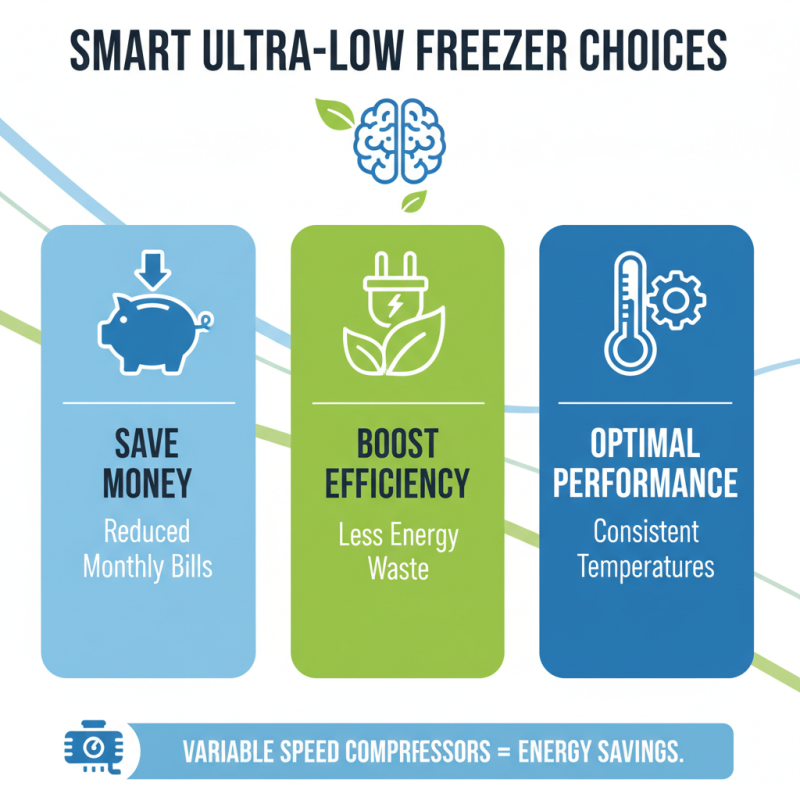
When choosing ultra low freezers, energy efficiency is crucial. These units run continuously, leading to high energy costs. A model with better efficiency can reduce your monthly bills significantly. Look for freezers with energy-saving features, such as variable speed compressors. These can help minimize energy usage while maintaining optimal temperatures.
Tips: Check the energy consumption ratings before making a purchase. Compare models to find the best option for your lab's needs. Sometimes, a slightly more expensive model saves money in the long run.
Operating costs also include maintenance and servicing. Regular upkeep ensures the freezer functions efficiently. Neglect can lead to increased energy use or breakdowns. Track your spendings on maintenance. It can add up unexpectedly over time.
Tips: Set a schedule for routine checks and cleaning. Consider setting aside a budget for any potential repairs. It's wise to invest in a unit that is easy to maintain, even if it seems pricier at first.
Assessing Storage Capacity and Temperature Range Needs
Selecting the right ultra-low freezer involves careful consideration of storage capacity and temperature range. Research from the National Institute of Standards and Technology highlights that optimal storage capacity ensures the preservation of biological samples. A freezer with adequate space minimizes overcrowding and maintains consistent temperatures throughout its interior.
Temperature range is critical. Freezers typically operate between -40°C to -80°C. For many laboratories, maintaining samples below -70°C can preserve their integrity. However, not all samples require such low temperatures. Some may be adequately stored at -40°C, reducing energy costs and prolonging the unit's lifespan.
Energy efficiency is also vital. According to the American Society for Testing and Materials, freezers consume a significant amount of energy. Facilities should evaluate their usage patterns. An underutilized freezer may lead to higher operational costs. Incorrect temperature settings can cause repeated freeze-thaw cycles. This can damage sensitive samples and affect research outcomes.
Regular assessment of storage capacity and temperature needs is necessary for effective lab management.
Comparing Brands and Models for Reliability and Performance
When selecting ultra low freezers, reliability and performance matter greatly. Many laboratories rely on these units to store sensitive biological materials. A single malfunction can lead to irreversible damage. Therefore, read reviews carefully. Focus on models that maintain consistent temperatures under various conditions.
Different brands offer unique features. Some have advanced alarm systems, while others boast energy-efficient designs. Take note of the operating noise level. Noisy units can be distracting in a lab environment. Look for user experiences that detail long-term performance. Longevity in use often reflects a model's overall reliability.
Consider the physical size and layout of your lab. Some freezers may take up more space than expected. Ensure you have adequate room for ventilation. It’s critical to find a balance between storage capacity and footprint. Don’t overlook energy consumption. This factor affects long-term operational costs.